
Google Ads Landing Pages in Malaysia: What Helps Turn Clicks into Enquiries?
The landing page continues the advertisement. It should answer the search clearly, reduce uncertainty and make calling, WhatsApp or form completion straightforward on a mobile screen.
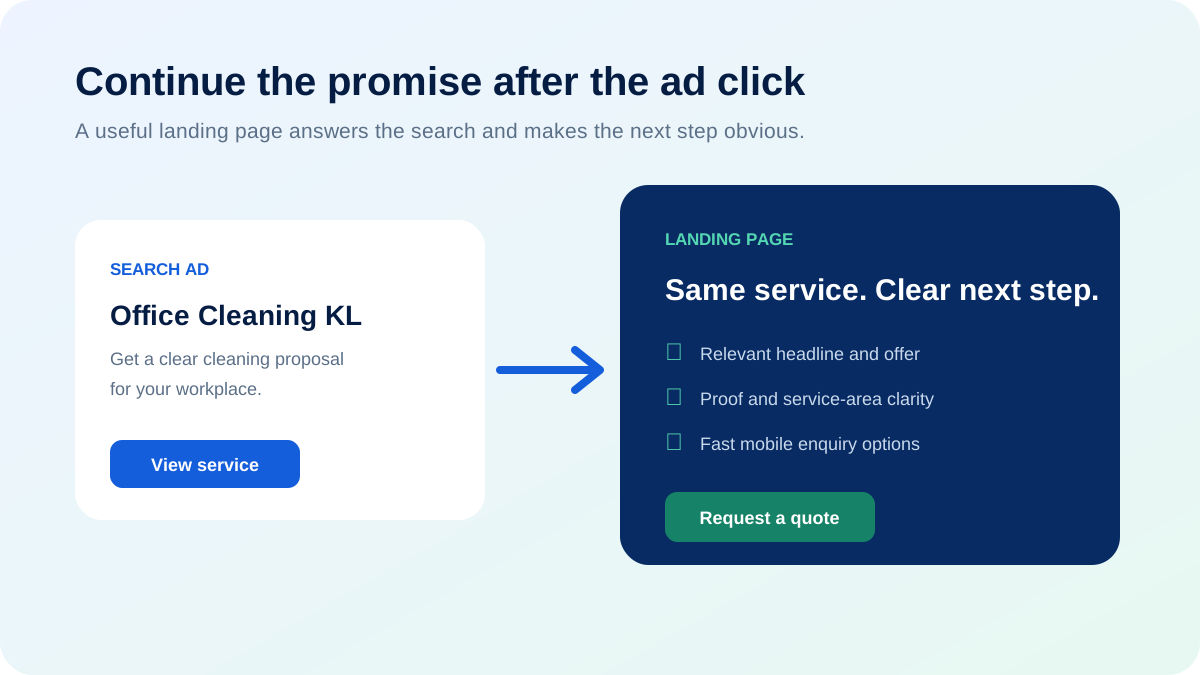
The landing page has one practical job
A landing page is the page someone reaches after selecting an advertisement. Its job is to continue the promise, help the visitor decide whether the offer fits and provide a clear next step.
Google describes landing-page experience using factors such as useful and relevant information, ease of navigation and whether the page meets expectations created by the advertisement. Landing-page experience is also a component of Quality Score.
Continue the search and advertisement
If an advertisement promotes office cleaning in Kuala Lumpur, the destination should make that service and location clear. Sending the click to a generic homepage with unrelated services forces the visitor to search again.
Strong message continuity normally aligns four elements:
- the search need;
- the advertisement promise;
- the landing-page headline and offer; and
- the enquiry conversation that follows.
A campaign with different services may need different destinations when one page cannot answer each intent clearly.
A useful landing-page structure
There is no universal template, but most lead-generation pages benefit from a clear hierarchy:
- Headline: state the service and useful outcome.
- Supporting explanation: clarify who the offer is for and where it applies.
- Primary action: make the next step visible early.
- Service detail: explain what is included and what is not.
- Proof: use verified experience, examples, reviews or process evidence.
- Risk reduction: answer timing, coverage and common concerns.
- Repeated action: provide an easy enquiry route after the visitor has enough information.
Keep claims accurate. Do not invent awards, customer numbers, guarantees or response times merely to make the page appear persuasive.
Trust for Malaysian service enquiries
Visitors may want to know whether the company serves their area, understands the required job and can be contacted after submission. Useful trust content can include the legal business name, service areas, real project details, genuine reviews, an understandable process and clear contact options.
Local relevance should be factual rather than decorative. Mentioning Kuala Lumpur or Selangor repeatedly does not establish local capability. Explain coverage, scheduling, site assessment or other practical details that matter to the buyer.
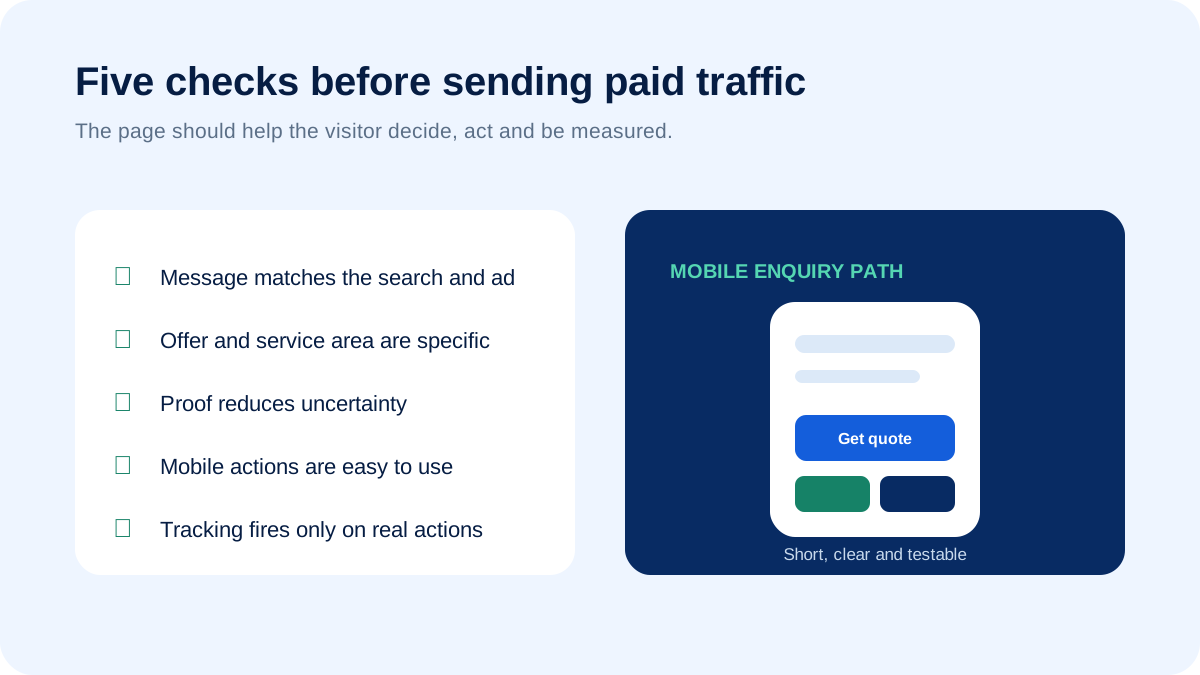
Design for the mobile decision
Many visitors will arrive on a phone. The page should load reliably, use readable text, avoid intrusive overlays and keep interactive controls large enough to use. Forms should request only information the business genuinely needs at the first step.
Place essential content in a logical order rather than hiding everything below a large decorative image. Test phone links, WhatsApp links, form keyboards, validation messages and success states on real mobile widths.
Phone, WhatsApp and form calls to action
Different customers prefer different contact methods. A form supports structured information, a phone call can handle urgent or complex questions, and WhatsApp is familiar to many Malaysian buyers.
Offer only channels the team can manage. If calls are unanswered or WhatsApp messages wait several days, adding more buttons will not improve the customer experience. State what happens after submission without promising an unverified response time.
Build measurement into the page
Plan tracking before launch. A form conversion should record a successful submission, not only a button click. Phone and WhatsApp interactions should be labelled according to what the site can observe.
Test every action and preserve useful campaign parameters where required. Then compare recorded conversions with spam, serviceability and qualified-lead feedback. A page can show a high conversion rate while generating weak enquiries if the offer is vague.
Existing website page or dedicated landing page?
| Use an existing page when | Consider a dedicated page when |
|---|---|
| The service, location and offer are already clear. | The current page combines unrelated services. |
| Mobile performance and enquiry paths are reliable. | The current website is slow or difficult to change. |
| Tracking can be implemented and tested. | A focused campaign requires a distinct message and measurement path. |
| The page contains sufficient verified trust information. | The homepage creates too many competing choices. |
A dedicated page is not automatically better. It is useful when it solves a real relevance, usability or measurement problem. Keep the brand, domain and business details consistent with the advertiser.
Frequently asked questions
Does every Google Ads campaign need a separate landing page?
Can a landing page guarantee more leads?
What calls to action work for Malaysian service businesses?
Should a landing page hide all navigation?
Sources and further reading
Product details were checked on 14 August 2026 using official Google Ads Help.