
How Much Do Google Search Ads Cost in Malaysia?
There is no universal Malaysian cost per click. A useful budget separates Google advertising spend from agency fees, then measures what each recorded enquiry actually costs.
The short answer
The cost of Google Search Ads in Malaysia depends on how much you decide to spend, what clicks cost in the auctions you enter, and how efficiently those clicks turn into useful enquiries. You also need to account for campaign-management fees if an agency or specialist manages the work.
A practical total-monthly-cost view is:
No responsible guide can promise a universal CPC or enquiry cost. A lawyer in Kuala Lumpur, an industrial supplier targeting Peninsular Malaysia and a neighbourhood repair service enter different auctions with different intent, competition and commercial value.
How Google Search Ads pricing works
Search Ads generally operate through auctions that happen when someone searches. Eligible advertisers do not simply buy a fixed position. Google says Ad Rank considers the advertiser’s bid, ad and landing-page quality, expected impact of assets, thresholds, the context of the search and auction competitiveness.
Your actual CPC is the amount charged for a click. Google explains that it is often below a maximum CPC bid because the auction charges the amount needed to clear relevant thresholds and compete with the advertiser below, although some bidding settings can affect this.
You also choose an average daily campaign budget. Google currently calculates the monthly charging limit using 30.4 times that daily budget when it remains unchanged. Individual days can spend more or less because traffic fluctuates, so budget monitoring should use current account reporting rather than a simple daily snapshot.
Advertising spend and agency management fees are different
This distinction prevents many pricing misunderstandings:
- Advertising spend pays for traffic delivered through Google Ads. It is the campaign budget.
- Management fee pays the specialist or agency for planning, research, setup, ads, search-term reviews, negative keywords, optimisation, measurement checks and reporting.
Some providers charge a percentage of ad spend. Others use a fixed monthly fee. Always ask whether tax, account setup, landing-page work, tracking, creative work and reporting are included, and who will administer the advertising account.
Factors that affect cost per click
Ten factors commonly shape the price and usefulness of traffic:
- Industry: sectors with high-value customers may support stronger bids.
- Competition: more eligible advertisers can make auctions more competitive.
- Location: a dense commercial area can behave differently from a smaller service radius.
- Keyword intent: “hire office cleaner” signals a different need from “how to clean an office.”
- Match type: broad, phrase and exact matching give different levels of reach and control.
- Quality and relevance: Google considers the usefulness and relevance of ads and landing pages.
- Landing-page experience: speed, usability and message continuity influence users and are considered in auction quality.
- Bidding approach: manual and automated strategies make different auction decisions.
- Conversion rate: it does not set CPC directly, but it changes what each enquiry costs.
- Lead quality: ten poor enquiries can be worth less than two qualified opportunities.
Good management therefore aims beyond obtaining the cheapest click. It aligns the search, keyword, advertisement, offer and landing page with a real business need.
Why CPC is not the same as cost per lead
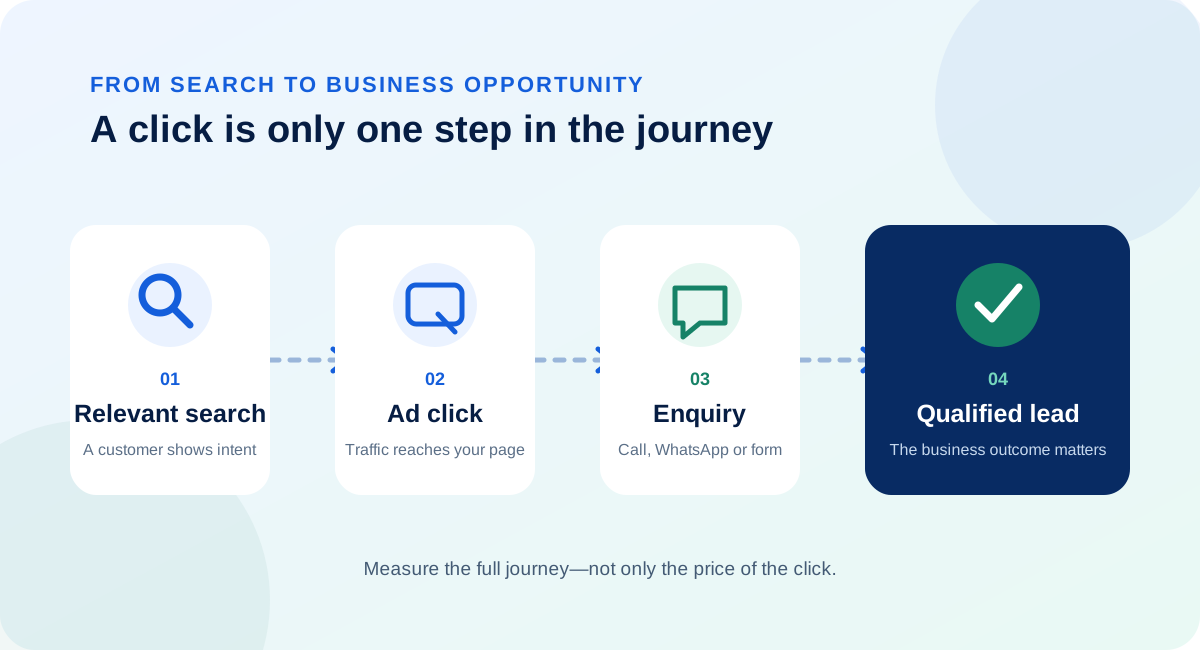
CPC measures traffic cost. Cost per enquiry divides advertising spend by recorded enquiries. That difference is essential when assessing a campaign.
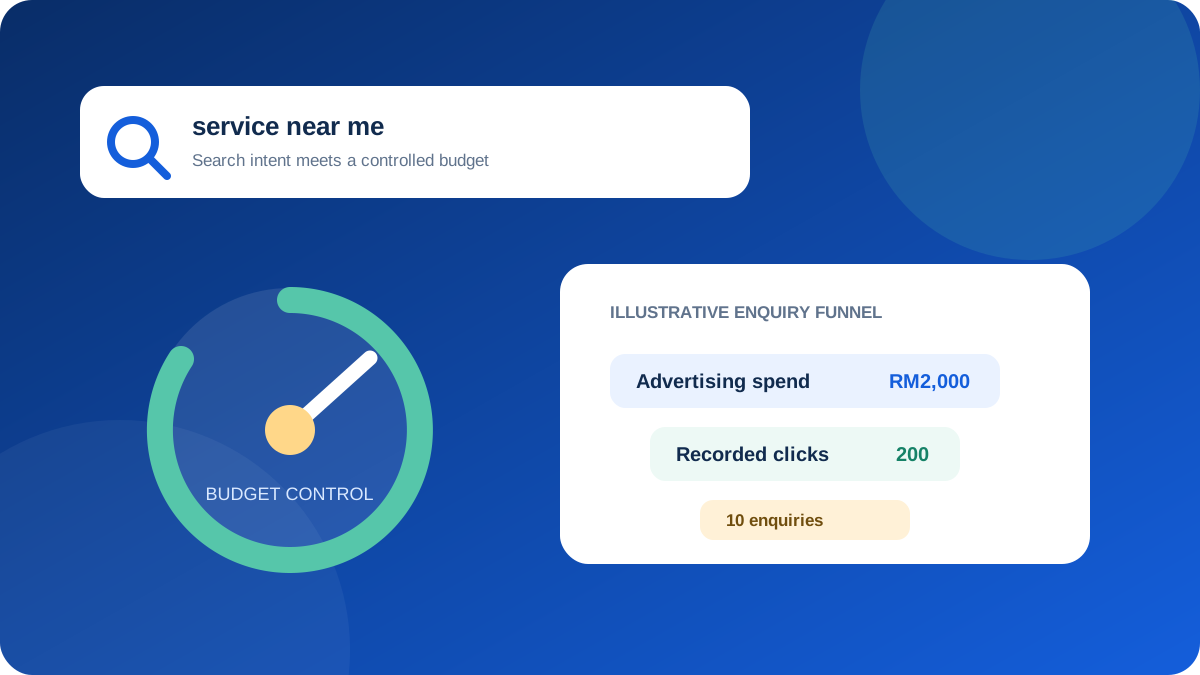
In this illustration, average CPC is RM10 and cost per recorded enquiry is RM200. Neither figure explains whether the enquiries were qualified, answered, quoted or converted into customers. Offline follow-up and lead-quality feedback complete the picture.
Illustrative monthly budget scenarios in RM
These scenarios show how different test budgets might be used. They are not recommendations, forecasts or benchmarks.
| Illustrative ad spend | Possible purpose | Important limitation |
|---|---|---|
| RM1,500/month | A narrow location, limited hours or tightly focused service test. | May collect data slowly in competitive auctions. |
| RM3,000/month | A broader test of relevant commercial searches across a defined market. | Actual click volume depends on live auction costs. |
| RM6,000/month | More auction participation or broader coverage for a proven campaign. | More spend does not fix weak targeting, an unclear offer or poor follow-up. |
To translate a monthly figure into an average daily budget, Google uses 30.4 average days. For example, RM3,040 divided by 30.4 gives an average daily budget of RM100. Daily spend can vary, so use the account’s budget and billing reports to confirm actual limits and charges.
How to choose a starting budget
Start with business economics rather than a copied benchmark. Ask:
- What is a qualified enquiry worth before a sale occurs?
- How many enquiries can the team respond to properly?
- Which products, services and locations are most commercially important?
- What do current Keyword Planner estimates suggest for relevant keywords?
- How much can the business test without needing immediate, guaranteed payback?
- Is tracking ready to distinguish calls, WhatsApp clicks, forms and real qualified leads?
A useful test needs enough time and participation to reveal search terms and user behaviour. The appropriate period varies. Seasonal demand, limited search volume, delayed sales cycles and advertiser-verification timing can all affect interpretation.
How to control wasted advertising spend
Waste control is an ongoing process, not a one-time keyword list. Google’s search terms report shows searches that triggered advertisements and can help identify less relevant terms. Practical management includes:
- choosing keyword themes with clear commercial intent;
- using suitable match types rather than assuming one type fits every situation;
- reviewing actual search terms;
- adding negative keywords for irrelevant demand;
- excluding unsuitable locations and refining schedules;
- matching advertisements closely to the offer;
- checking that conversion actions record correctly;
- comparing enquiry quality—not only click volume; and
- adjusting budget and bidding based on useful evidence.
Negative keywords need care. Google notes that they behave differently from positive keywords, and overly broad exclusions can block useful searches. Review changes and date ranges before assuming an exclusion failed.
Fixed-fee management versus percentage-based fees
| Consideration | Fixed monthly fee | Percentage of ad spend |
|---|---|---|
| Agency cost as ad spend rises | Stays fixed within the agreed scope. | Usually increases with advertising spend. |
| Budget forecasting | Management cost is straightforward. | Requires calculating the percentage each month. |
| Scope | Must be defined clearly to avoid assumptions. | Must also define campaigns, markets, tracking and deliverables. |
| Best question to ask | What work and account access does the fee include? | What is the percentage, minimum fee and included work? |
Neither structure automatically guarantees better work. Assess planning quality, tracking, communication, search-term discipline, reporting definitions and commercial alignment. Go Marketing uses a fixed fee for the scope published on its homepage.
When a dedicated landing page may help
A campaign can send traffic to an existing website if that page is fast, mobile friendly and relevant. A dedicated landing page may help when the current website is slow, presents too many choices, lacks a clear enquiry path or cannot support suitable tracking.
Good landing-page continuity answers the promise made in the advertisement, explains the offer, reduces uncertainty and makes calling, WhatsApp or form completion straightforward. It can improve conversion rate and lead clarity, but it does not guarantee results. Price, competition, reputation, response time and the offer still matter.
Go Marketing’s RM1,200 monthly package adds one professionally designed landing page to the RM1,000 Search Ads management plan, including form, WhatsApp and phone CTAs, hosting and agreed conversion tracking.
Practical conclusion
There is no credible one-number answer to “Google Search Ads cost Malaysia.” Separate ad spend from the management fee, use official auction and budget mechanics for product facts, and treat any RM performance figures as account-specific or illustrative unless a documented Malaysian dataset supports them.
Begin with a focused commercial objective, realistic test budget, relevant landing experience and reliable tracking. Then judge the campaign using defined enquiries, lead quality and business outcomes—not CPC alone.
Frequently asked questions
Is there a standard Google Ads cost per click in Malaysia?
Is the Google advertising budget included in an agency fee?
How should a business choose a starting budget?
Does a lower CPC always mean a better campaign?
Can a landing page reduce Google Search Ads costs?
Sources and further reading
Current product information was checked on 12 August 2026 using official Google Ads Help sources. Examples in this article are Go Marketing illustrations, not Google or Malaysian market benchmarks.